What is PRP?
Stimulation with your own blood
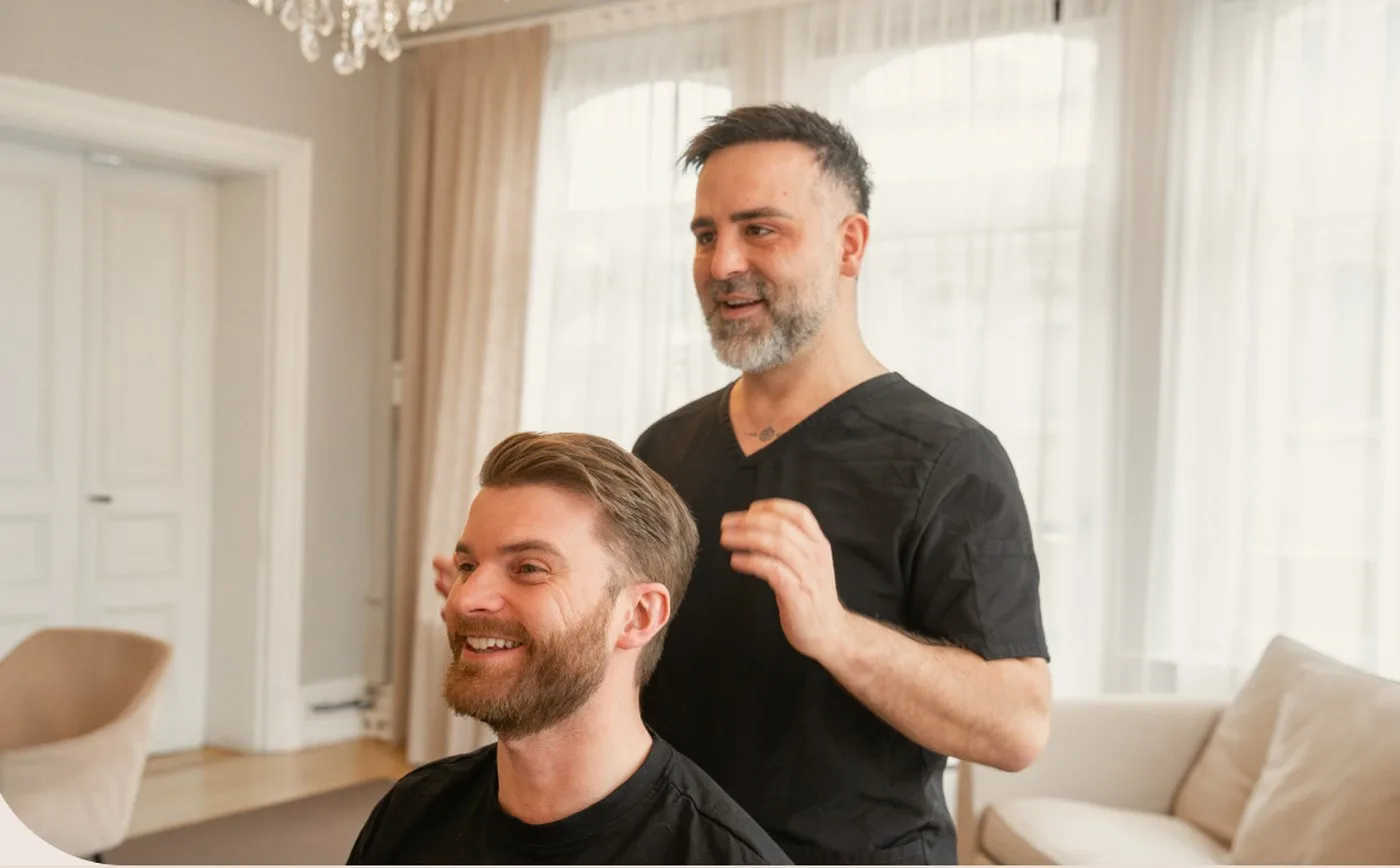
PRP stands for Platelet Rich Plasma. A PRP treatment uses your own blood to activate follicles and skin cells naturally, without chemicals or additives.
PRP treatment for hair in Gothenburg uses your own blood plasma, rich in growth factors, to activate resting follicles and strengthen existing hair growth, whether you have shed more hair than usual or want to counteract hair loss early.
PRP stands for Platelet Rich Plasma. A PRP treatment uses your own blood to activate follicles and skin cells naturally, without chemicals or additives.
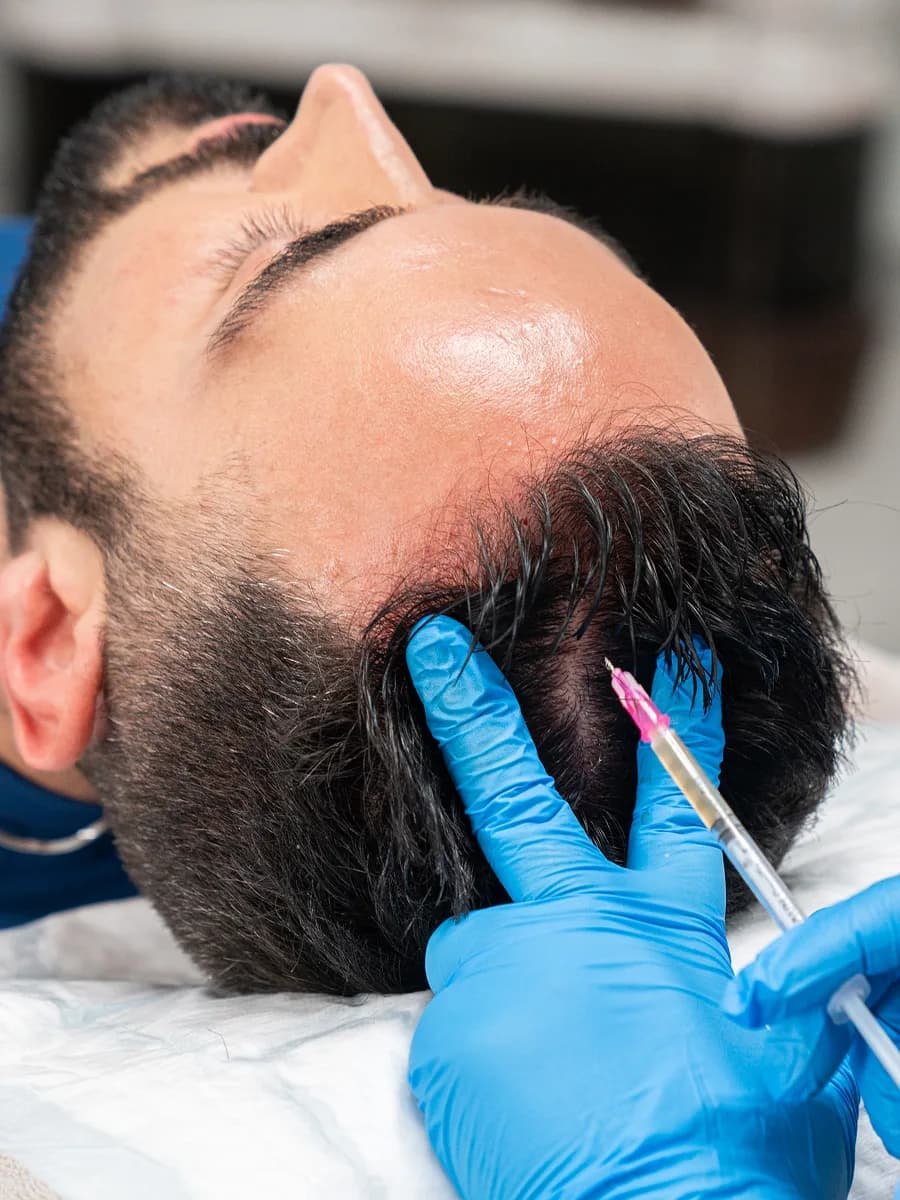
First we take a small blood sample. The blood is then spun in a centrifuge that separates the plasma from the rest of the blood. The plasma contains platelets that carry growth factors. This concentrated plasma is injected into the scalp, beard or brows.
When PRP is injected into the scalp the platelets start to work and release their growth signals. This activates blood circulation around the follicles and strengthens their ability to produce new hair.
The price you see is the price you pay. Fixed price at booking, no hidden fees.
Smaller area or after a hair transplant.
Scalp, hairline or crown.
Extended area when more of the scalp is treated.
When PRP is injected into the scalp, concentrated growth factors are released that signal the follicles to activate their growth phase. New blood vessels form around each follicle, which ensures better nutrient supply and oxygenation.
The result: hair strands that live longer, grow thicker and shed less. For those with hereditary hair loss, PRP can delay the progression by several years. For hair transplant patients, PRP improves healing and the density of the result.
Book consultationSlows hereditary hair loss
Activates dormant follicles
Extends the hair’s growth phase
Produces thicker and stronger strands
Improves the result of hair transplants
Natural method without chemical additives
PRP is not a chemical product, it is the body’s own signalling molecules concentrated in the right place. Here is the hair cycle and the five most important growth factors that work in your scalp after a treatment.
The hair strand grows actively for several years.
The follicle takes a pause but remains in place.
The hair strand loosens and is replaced by a new one.
The problem appears when too many follicles enter the resting phase at the same time, or when they become too weak to start a new cycle. The hair then thins over time.
Builds up the tissue around the follicle and strengthens its anchoring.
Helps the body form more small blood vessels so the follicles get better access to oxygen and nutrients.
Keeps the follicles active longer in the growth phase, which contributes to denser hair.
Improves the environment in the skin around the follicle so it can function without irritation.
Ensures that growth happens at the right pace and that the skin recovers after the treatment.
In short: PRP places the body’s own signalling molecules exactly where they do the most good, right next to the follicles.
We assess this at the consultation and set a realistic plan.
Every hair strand grows from a follicle beneath the skin. Inside it are two types of cells that work together:
Control the follicle and signal when it should grow or rest.
Build the hair strand itself from keratin, the hair’s most important protein.
Together they are called growth cells. Their only job is to make the hair grow. Think of the follicle as a lamp with a switch. It can be off (resting phase) or on (growth phase). The growth factors in PRP press the switch: they signal the follicle to move from rest to production. At the same time more small blood vessels form around it, providing oxygen and nutrients so the hair can keep growing.
The follicle’s cells are alive but have paused growth. Common with stress, hormonal changes or nutritional deficiency. PRP can often wake these.
The cells still work, but the hair that grows becomes thinner. Typical with hereditary hair loss (DHT sensitivity). PRP can strengthen the follicle and slow the decline.
Follicles that have been inactive for a long time can shrink and disappear completely, for example after scarring or long untreated hair loss. Here PRP does not help, as no living cells remain. Then a hair transplant is needed instead.
Read about hair transplantationPRP works best when the hair has become thinner over time and the strands have lost strength, but the follicles remain. You may benefit from PRP if you:
Still have hair in the area you want to treat
Want to slow hair loss and keep what you have
Prefer a natural method over medication or surgery
Most hair-loss products work on the surface. PRP works where the hair begins, down at the follicle: no chemistry, no pills or serums, just your own growth factors directed where they are needed. At a free consultation we look at your hair and make a plan that suits you.
PRP is not a quick fix. Here is how it usually looks, step by step, so you know what to expect.
3 to 4 treatments with 4 to 6 weeks in between.
Hair loss starts to ease. Often the first thing you notice.
New, thin strands and a denser feel in the treated area.
Final result of the initial course. Then maintenance roughly every 6 months.
They solve different things and often work best together.
PRP strengthens and preserves the follicles you still have, with the body’s own growth factors.
A hair transplant moves new, living follicles to areas where the hair has disappeared completely.
PRP before and after a transplant supports healing, which is why four PRP treatments are included in all our hair transplants.
Slow hair loss in the hairline and crown with the body’s own growth factors.
Read more about PRP for menRestore volume and density where the hair has thinned, for example along the parting or across the whole scalp.
Read more about PRP for womenFill in patchy areas and achieve more even, denser beard growth.
Read more about PRP for beardsRestore the density and natural shape of your brows, without chemicals.
Read more about PRP for eyebrows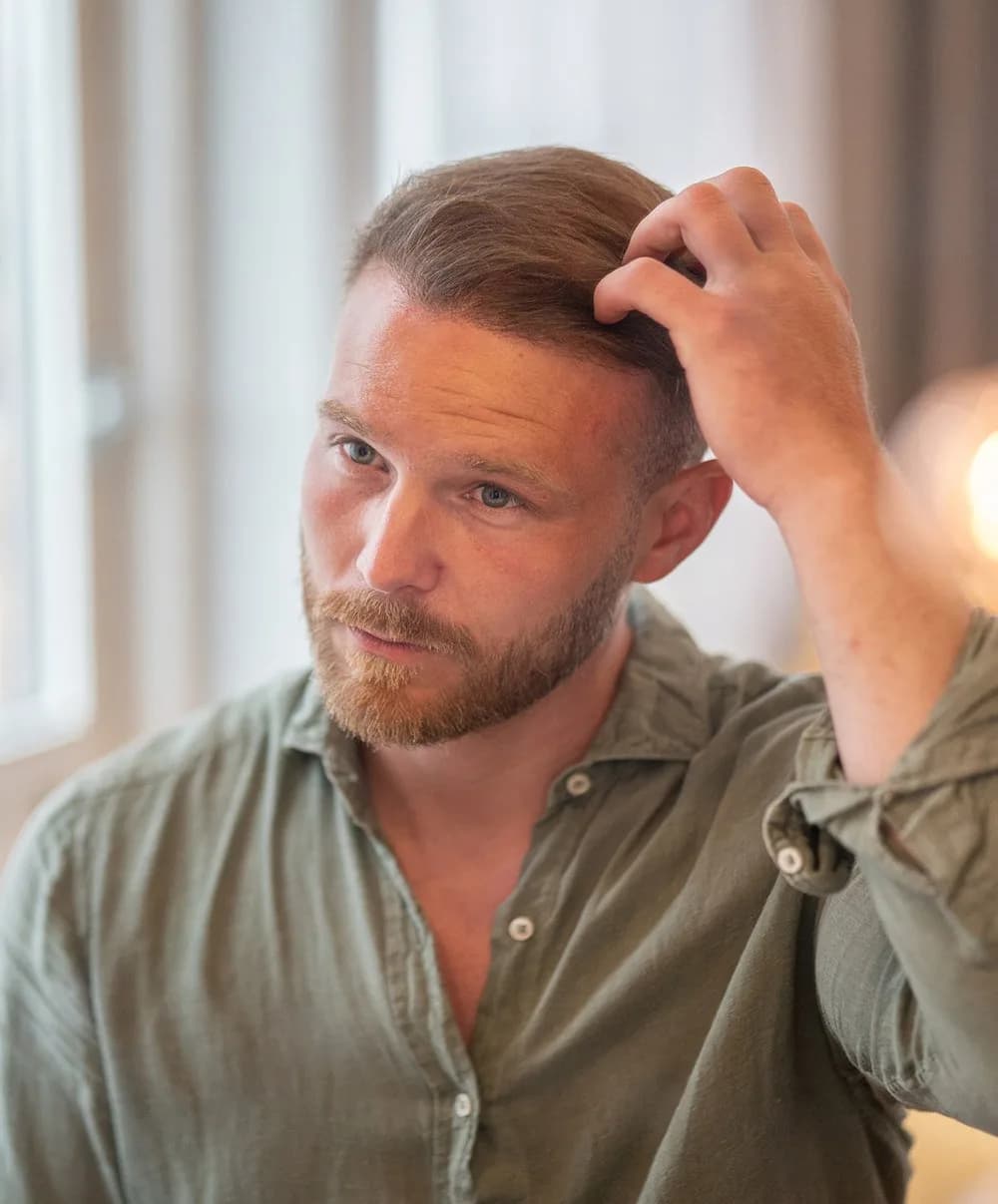
Have you noticed receding temples, a hairline that has moved back or a crown that has become sparser? Male hair loss affects 80% of men during their lifetime and often starts as early as the mid-20s.
With PRP we strengthen the environment around the follicles with growth factors from your own blood. This slows hair loss, wakes resting follicles and strengthens existing hair. A natural method that works both on its own and as a complement to a hair transplant.
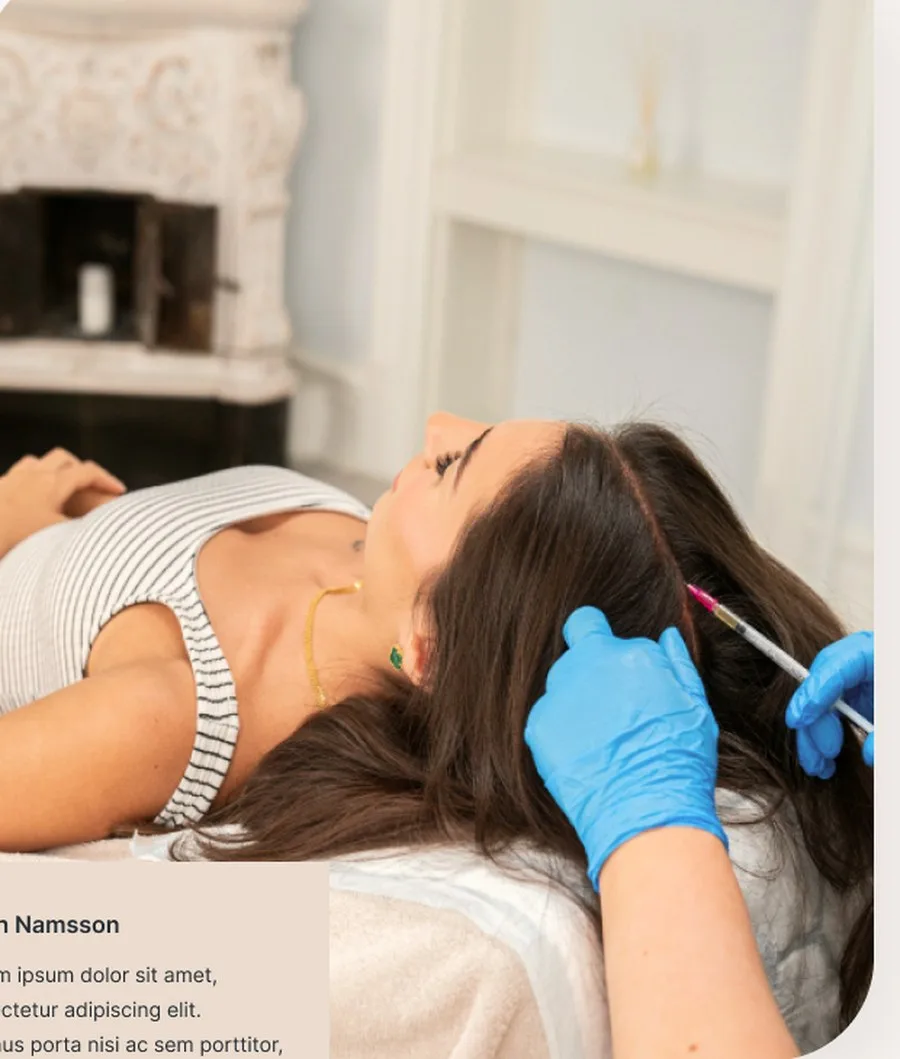
Have you noticed the hair becoming thinner or that your parting shows more than before? Many women experience changes in their hair during different stages of life, postpartum, menopause or alongside hormonal changes.
With PRP we strengthen the environment around the follicles with growth factors from your own blood. More strands can grow and the hair can regain volume and density where it has thinned.
PRP with your own growth factors activates passive follicles and strengthens the active ones, for a fuller beard where it was previously sparse.
PRP contains growth factors that can prompt follicles in the skin to start producing hair again.
Follicles that are already active get support to create more robust hair strands, making the beard more resilient.
PRP encourages more small blood vessels to form around the follicles. This means oxygen and nutrients reach them more easily, strengthening growth.
The beard gains more strands and grows more evenly, even in areas that were previously sparse.
PRP adds growth factors that make the follicles in the beard area work more actively. When more follicles produce hair at the same time, the beard becomes denser and more even.
Many see a gradual improvement after three to six months with repeated treatments. How fast it goes depends on how active the follicles are.
The treatment works best if you still have follicles but uneven coverage. PRP cannot create new follicles where they are entirely missing, but it strengthens the existing ones.
Yes. Just like in the scalp, PRP is based on the body’s own material. You may be a little red or tender afterwards, but it passes quickly.
The growth factors in PRP activate passive follicles in the brows, for denser strands, more defined shape and a natural result without chemicals.
The growth factors in PRP stimulate the follicles in the brows to start producing hair again. This can result in denser, stronger strands and a more defined shape.
Most people see a gradual improvement after three to four treatments. The follicles need time to respond, so the result builds up over time.
Yes. Because PRP uses your own blood there is no risk of allergy or rejection. We also use milder doses around the sensitive eye area.
A series of three to four treatments usually gives a noticeable difference. After that, maintenance once a year is enough to preserve the result.
Your PRP is performed by licensed staff, with a doctor responsible for ensuring the treatment is right for you.
Performs your PRP injections. Founded Hair TP Clinic in 2014 and has particular experience with female hair loss.
Ensures every treatment is right for you before it begins, with both outcome and safety in focus.
Maximum two patients per day · Licensed staff · Clinic in Gothenburg since 2014
“A fantastic clinic with knowledgeable staff. The entire process has been incredibly professional.”
“The best hair transplant clinic in Gothenburg. The treatment is personal and the result looks completely natural.”
“A superb experience from start to finish. Natural result and excellent care.”
We want you to feel confident in your choice. We answer your questions and show how a treatment can be performed, completely free of charge.